
Study goals
Challenges for the future: improving children’s health and wellbeing
Although it is partly dictated by their genes, children’s development is above all determined by their constant interaction with their immediate environment. This environment has changed considerably in recent decades, not least with the raising of the school-leaving age, new eating habits, reduced levels of physical activity and an increasingly sedentary lifestyle, higher levels of air pollution and exposure to new chemical pollutants, and more diverse family structures.
Tracking children’s lives from birth to adulthood, the Elfe study was set up precisely to find out more about how their development, health and socialization are influenced by their environment, from the womb to adolescence.
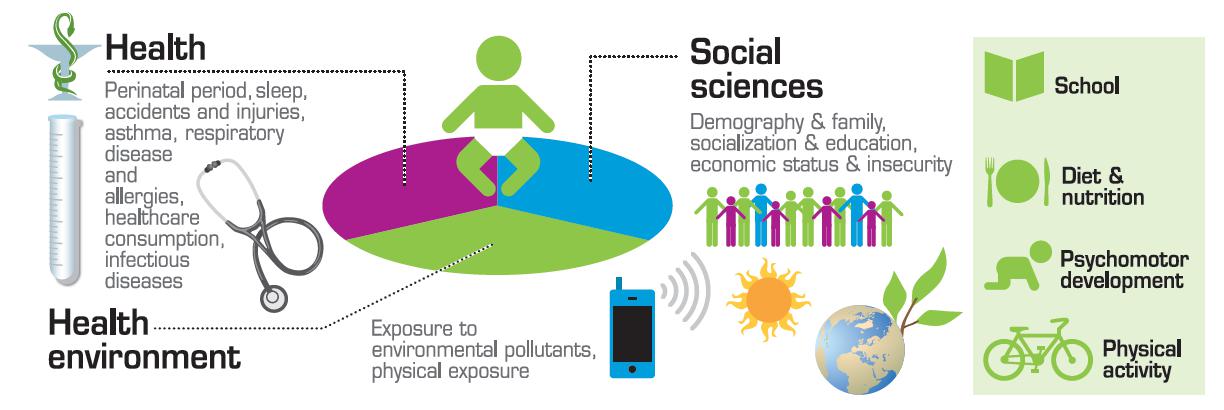
Elfe’s longitudinal dimension will allow it to provide better answers to many of the questions that parents and scientists ask about children’s development and wellbeing:
• At what age should new foods be introduced? How do they influence food preferences and subsequent health?
• How do different types of childcare arrangements affect young children’s relations with their peers, their integration at nursery school and their language acquisition?
• What impact do the pollutants in our environment have on children’s health and development?
• What are the family, financial and sociocultural factors that determine children’s academic achievement?
• How do computer use, sport and cultural activities influence children’s socialization and their physical and intellectual development?
• Do our children grow up faster than they used to?
In many areas, the research conducted under the Elfe project will provide the public authorities with benchmarks for devising more effective health and family policies.